.png)
The Complete Guide to the Upanishads

Updated: Sep 29

"Who is this 'I' that experiences the world?"
This single question is the catalyst for the entire corpus of the Upanishads. While the earlier portions of the Vedas focused on the Karma-kanda (the section of ritual action), the Upanishads represent the Jnana-kanda—the section of knowledge. They are not mere books of theology; they are manuals for the psychological and spiritual dissection of existence.
To approach the Upanishads is to move from the outer world of ceremony to the inner world of consciousness. They mark the transition from asking "How do I please the gods?" to "Who am I, and what is the nature of Reality?"
Upanishads Meaning: What Does the Term Signify?
The word Upaniṣad is derived from three Sanskrit roots: upa (near), ni (down), and sad (to sit). Literally, it means "to sit down near" a teacher to receive a secret, sacred transmission.
In the ancient tradition, this was not a classroom lecture. It was an intimate, oral transmission. The student sat at the feet of the guru, not just to hear words, but to catch the vibration of truth. The "sitting down" signifies a state of receptivity and humility—the recognition that the highest truths cannot be reached through intellectual gymnastics alone, but through a direct transmission of experience.
The Upanishads are the concluding portions of the Vedas, which is why they are collectively called Vedānta (the end of the Vedas). This "end" is twofold: it refers to the final chapters of the texts and the ultimate goal of human existence: the final destination of the soul's journey toward liberation.
Historical Context: From Ritual to Realisation
The evolution of Indian spirituality is mirrored in the shift from the Samhitas (hymns) and Brahmanas (ritual manuals) toward the Upanishads. For centuries, the Vedic religion centered on Yajna (sacrificial fire ritual), believing that precise external actions could maintain cosmic order (Ṛta) and secure worldly prosperity.
However, around the 8th century BCE, a profound intellectual shift occurred. The seers (Ṛṣis) began to realize that while ritual could improve one's circumstances, it could not solve the fundamental problem of suffering and death. They moved the "fire" from the external altar to the internal heart. The ritual became meditation; the sacrifice became the ego; the deity became the universal consciousness. This was the birth of the philosophical inquiry that defines the Upanishadic era.

How Many Upanishads Are There? (The Essential List)
The number of Upanishads varies depending on the tradition and the list used. While there are hundreds of texts claiming the title, the Muktika canon lists 108. However, most practitioners and scholars focus on the "Principal Upanishads" (Mukhya Upanishads), which are those commented upon by the great philosopher Śaṅkara in the 8th century.
The ten most influential texts include:
1. Īśa Upanishad: A short, powerful text emphasizing that the entire universe is enveloped by the Divine.
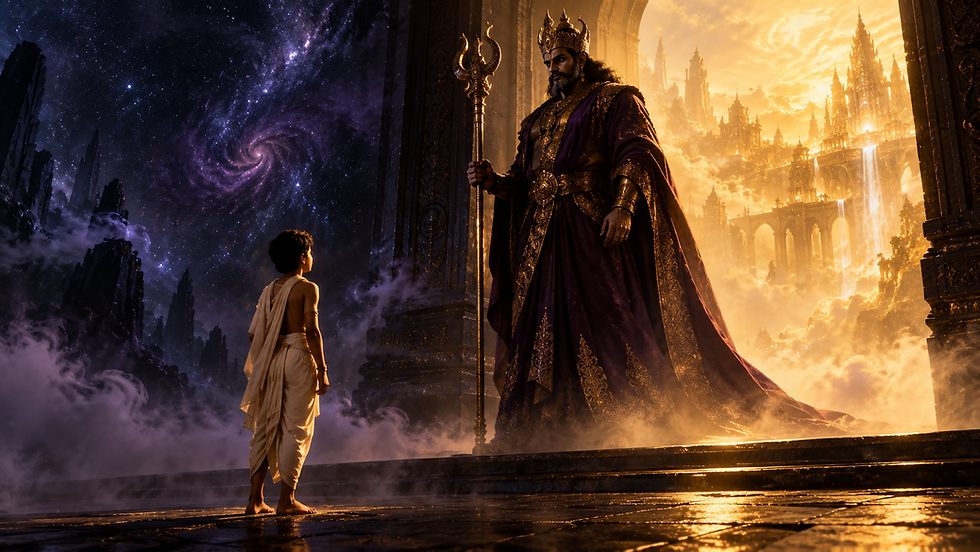
2. Katha Upanishad: A dialogue between a young boy, Nachiketa, and Yama, the Lord of Death, regarding the nature of the soul.
3. Muṇḍaka Upanishad: Focuses on the distinction between lower knowledge (worldly) and higher knowledge (spiritual).
4. Maṇḍukya Upanishad: Explores the four states of consciousness and the sacred syllable AUM.
5. Taittirīya Upanishad: Discusses the layers of the human personality (Kośas).
6. Aitareya Upanishad: Explains the creation of the universe and the nature of the Self.
7. Chāndogya Upanishad: Famous for the phrase Tat Tvam Asi ("Thou art That").
8. Bṛhadāraṇyaka Upanishad: One of the oldest and longest, dealing with the vastness of Brahman.
9. Śvetāśvatara Upanishad: Focuses on the relationship between the individual soul and the Supreme.
10. Prashna Upanishad: A series of six questions regarding the origin of life and consciousness.
Deep Dive: Stories and Teachings of the Major Texts
The beauty of the Upanishads lies in their use of dialogue and allegory to explain the abstract.
In the Katha Upanishad, Nachiketa is taught that the senses are like chariots and the mind is the driver. If the driver is asleep and the horses (senses) are wild, the chariot of life crashes. The lesson is clear: discipline of the mind is the only way to reach the "undying" state.
The Chāndogya Upanishad uses a powerful analogy of the salt in water. Just as salt dissolves in water and becomes invisible but is present everywhere, the Divine (Brahman) is invisible to the eyes but permeates every atom of existence. The text urges the student to realize that their innermost core—the Ātman—is identical to that universal salt.
In the Bṛhadāraṇyaka Upanishad, the sage Yājñavalkya explains to his wife, Maitreyī, that the grief of separation is a result of seeing ourselves as separate entities. He teaches that the realized soul is like the ocean—everything flows into it, but it remains still and unmoved.

Core Philosophical Doctrines
At the heart of all Upanishadic thought are three interconnected pillars: Brahman, Ātman, and Maya.
Brahman (The Ultimate Reality)
Brahman is not a "god" in the western sense, but the infinite, unchanging substrate of the universe. It is Sat-Cit-Ānanda (Existence-Consciousness-Bliss). Brahman is both the material cause (the stuff the universe is made of) and the efficient cause (the intelligence that shapes it). In the Upanishads, Brahman is described as Nirguṇa (without attributes) in its absolute state, and Saguṇa (with attributes) when perceived through the lens of human devotion.
Ātman (The Individual Soul)
While Brahman is the macrocosmic reality, Ātman is the microcosmic reality. It is the silent witness, the unchanging observer behind the shifting curtains of thoughts and emotions. The revolutionary discovery of the Upanishads is the identity: Ātman is Brahman. The spark in the individual is the same as the fire of the universe. To know oneself is to know the Absolute.
Māyā (The Illusion of Separation)
If we are essentially one with the Divine, why do we feel lonely, afraid, and limited? The answer is Māyā—the creative power that projects the world of multiplicity. Māyā is not a "lie," but a misperception. It is like seeing a rope in the dark and mistaking it for a snake; the fear is real, but the snake is an illusion. Once the light of knowledge (Jñāna) is brought in, the illusion vanishes, and the truth of the rope remains.

Paths to Liberation: Meditation and Knowledge
The goal of the Upanishads is Mokṣa (liberation) from the cycle of birth and death (Saṃsāra). This is not a place one goes to after death, but a state of being realized while alive. The texts suggest two primary vehicles for this realization:
1. Jñāna Mārga (The Path of Knowledge): This involves Śravaṇa (listening to the truth), Manana (contemplating the truth), and Nididhyāsana (deeply meditating on the truth until it becomes an experience). It is a process of "neti-neti" (not this, not that), stripping away everything that is temporary until only the Eternal remains.
2. Upāsanā (Meditation/Contemplation): The Upanishads provide specific techniques to focus the mind. For instance, meditating on the Hṛdayākaśa (the space within the heart) allows the practitioner to locate the seat of the Ātman. By concentrating the scattered energy of the mind into a single point, the veil of Māyā begins to thin.
The Four Mahavakyas: The Essence of Wisdom
The "Great Sayings" (Mahāvākyas) summarize the entire philosophical machinery of Vedanta in four crystalline statements:
● Pragñānam Brahma: "Consciousness is Brahman." This establishes that the essence of the universe is not matter, but intelligence.
● Tat Tvam Asi: "Thou art That." This is the direct address from the teacher to the student, asserting that your individual identity is identical to the Universal Reality.
● Aham Brahmāsmi: "I am Brahman." This is the internal realization—the shift from being a seeker of the truth to being the truth itself.
● Ayam Ātma Brahma: "This Self is Brahman." This points to the physical presence of the Divine within the living being.
Vedas vs Upanishads: Key Differences
To understand the Upanishads, one must understand how they differ from the broader Vedic corpus. While the earlier portions of the Vedas focus on the "how" of religious life, the Upanishads focus on the "why."
Feature | Early Vedas (Samhitas/Brahmanas) | Upanishads (Vedānta) |
Primary Focus | Ritual, Sacrifice, and Prayer | Knowledge, Inquiry, and Realization |
Method | External Yajna (Fire Ritual) | Internal Yajna (Meditation) |
Goal | Worldly Prosperity and Heaven (Svarga) | Eternal Liberation (Mokṣa) |
Approach | Collective, Community-based | Individual, Guru-disciple based |
Key Question | "How do I please the gods?" | "Who am I and what is the Real?" |

Frequently Asked Questions about the Upanishads
What is the main message of the Upanishads?
The central message is the non-duality of existence: the individual soul (Ātman) is identical to the universal reality (Brahman). Liberation comes from realizing this unity and transcending the illusion of separation.
How are the Upanishads different from the Bhagavad Gita?
While both are foundational to Vedanta, the Upanishads are philosophical treatises focusing on inquiry and meditation. The Bhagavad Gita is a narrative dialogue that applies these philosophical truths to a practical crisis of duty and action.
Do I need to be Hindu to study the Upanishads?
No. The Upanishads are philosophical inquiries into the nature of consciousness and existence. Their teachings on the Self are universal and can be integrated into any spiritual practice or secular philosophical framework.
What is the meaning of the word "Upanishad"?
It is derived from three Sanskrit words: upa (near), ni (down), and shad (sit). Literally, it means "sitting down near" a teacher to receive secret or sacred instructions.
Which Upanishad should a beginner start with?
The Īśa Upanishad is often recommended for its brevity and poetic power, while the Kaṭha Upanishad provides a compelling narrative about death and the soul that is accessible to most readers.
What is the role of a Guru in studying these texts?
The Upanishads are dense and often paradoxical. A Guru (teacher) serves as a guide to prevent the student from misinterpreting the texts as mere intellectual puzzles, helping them move from theoretical knowledge to lived experience.
What is the difference between Brahman and a god?
In the Upanishadic sense, Brahman is the impersonal, infinite source of all existence—the very fabric of reality—rather than a deity with a personality who grants boons or judges souls.
What is "Neti-Neti" in Upanishadic practice?
Neti-Neti means "not this, not that." It is a meditative process of negation where the seeker discards all temporary identifications (body, ego, emotions) to reveal the only thing that cannot be negated: pure consciousness.
Key Takeaways
● Identity: The core premise is that your innermost self (Ātman) is the same as the Ultimate Reality (Brahman).
● Purpose: The primary goal of these texts is Mokṣa, or liberation from the cycle of suffering and rebirth.
● Method: Realization is achieved through a combination of Jñāna (knowledge), Upāsanā (meditation), and the guidance of a teacher.
● Perspective: The world of multiplicity is seen as Māyā (illusion), a veil that hides the underlying unity of existence.
● Essence: The Mahāvākyas provide the shortest possible summary of the philosophy: you are that which you seek.




Comments